
Favourite Things
Time as life's great collaborator

I have never seen the Sound of Music. I don’t want to - I just love the drag/musical theatre satires/comedy podcasts about divas references to it. But the song Favourite Things, learned many times in childhood singing lessons or drama classes, has been playing in my head.
Rodgers and Hammerstein: girl, did you invent mindfulness? The message of this song is so contemporary. A little ditty about grounding yourself in the day to day sensorial elements of life which bring you back to yourself in moments of flux and fear? Check. A celebration of the small, quotidien, close to home pleasures? Go off!
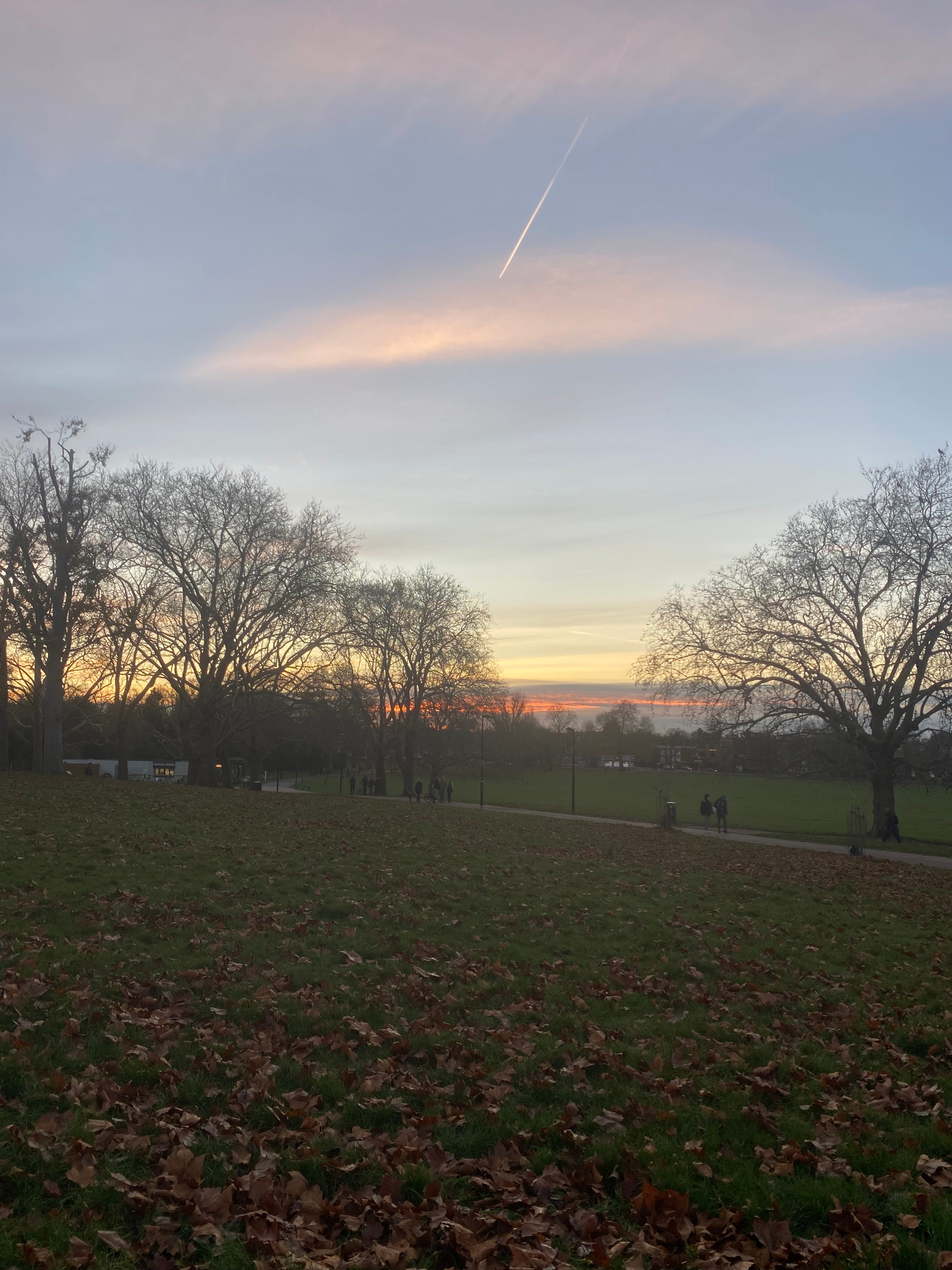
Walking across the common, nursing a toothache from clamping my jaw too hard as I sleep, the peached light of a November evening oozing over London, I itemise a few things I currently enjoy, which are tiny, mine, minutely sublime:
Mushroom brushes shaped like mushrooms
Toddlers’ faces as they shape a new question
Bowen Yang saying “patina”
Small people reaching to hold my hand
the lilies in my living room, reminding me of the person who carried them from the station
the red underside of one of my living room plants
peeling off the outer layer of a leek and thinking how they look like Gucci-era Tom Ford models in high-collar jackets
putting cedarwood oil on my wrists
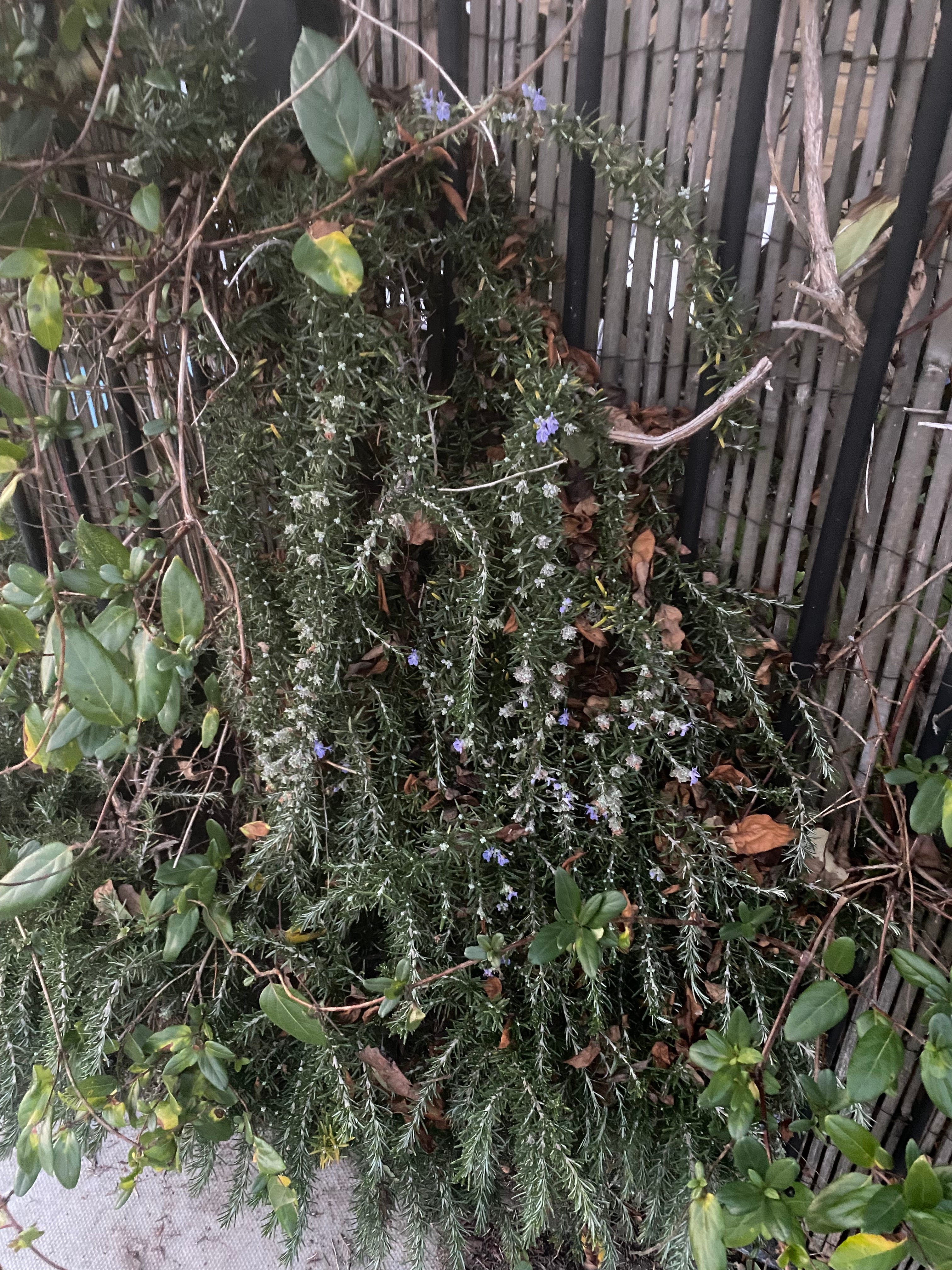
walking past a rosemary bush and the smell following me down the road
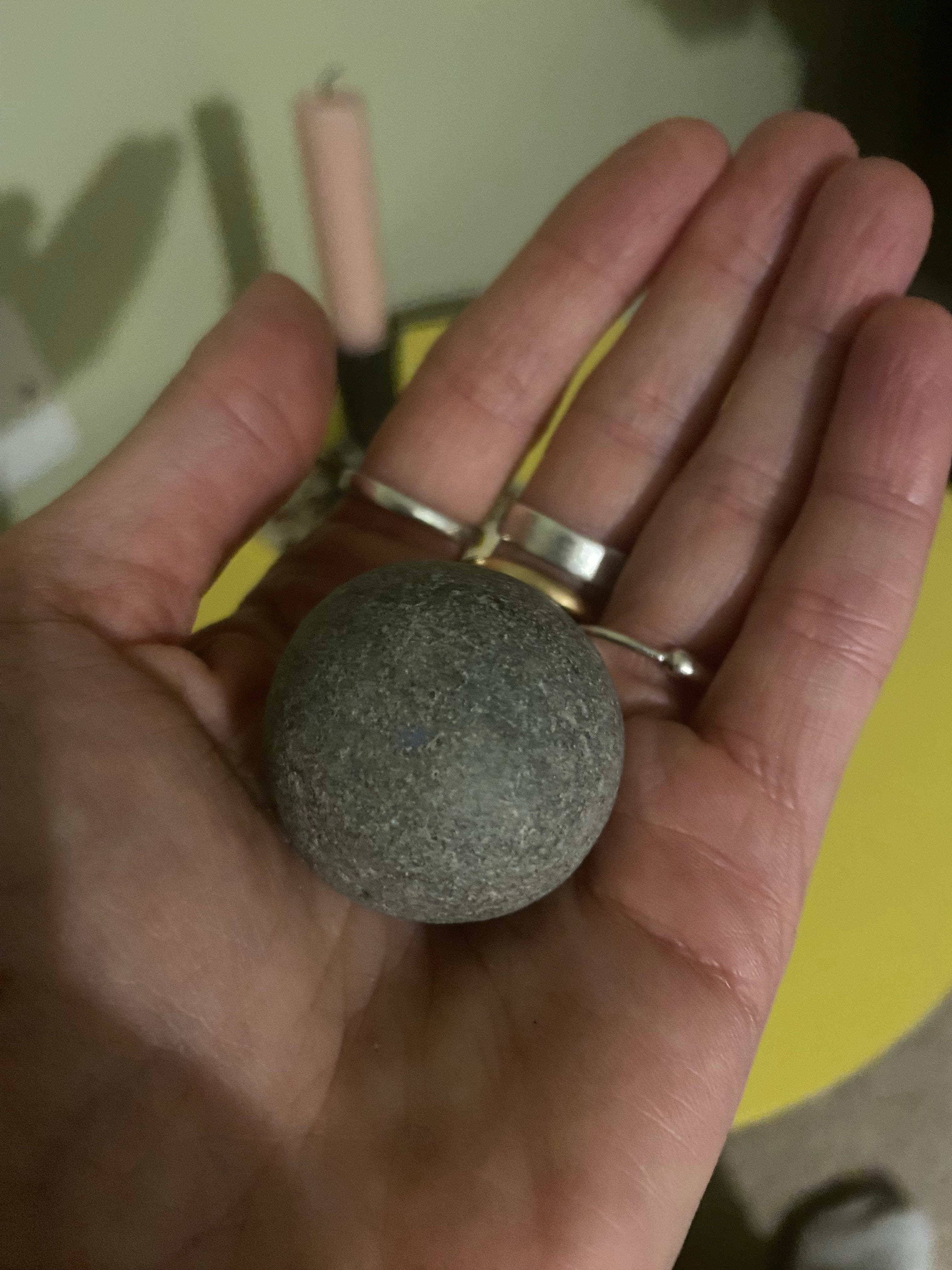
a perfectly round pebble collected from the beach near my home in Wales
laughing with a stranger at two squirrels chasing each other in Nunhead
These are a few of my favourite things.
Many of these are things which would have passed me by a few years ago. Or I wouldn’t have noticed; wouldn’t have stopped to give them enough presence and attention to lock them in my memory; I wouldn’t have given them time.
A lot of training as an actor involves deeply researching time and space, whether you name them or not. A lot of training did name them, as the key components for making performance, inspired by Mary Overlie’s Six Viewpoints (later developed into Nine Viewpoints by Anne Bogart, Tina Landau and the actors of SITI Company).
I’ve spent thousands of hours investigating time as an artistic material – tempo, duration, rhythm, story, flow, kineses, impulse, response…I know how crucial time is in changing a performance, a characterisation, a subtext. I guess one thing I hadn’t taken into account was just how much time was equally pivotal in shaping how we experience life.
I’m in my late 30s I am entering a period of life where I’m not outwardly considered a newbie, no longer the youngest in the room, or the inexperienced one (not that those labels were particularly right for me when I was younger and I certainly don’t see any of my younger friends and peers that way). I have lots of perspectives I never had before – I am seeing things in completely different ways. Simply because I’ve been in time a lot longer.
Like, I haven’t given my life-time the kind of focus I might dedicate to the rhythm of a movement in a Viewpoint improvisation – but time has changed me. Is changing me. I couldn’t have factored this in when I was 20 because…I didn’t feel or see time this way. I don’t think I even noticed it. I guess I assumed it would always feel like this limitless concept, but just a concept. Something I could experiment with in the studio and leave there. Lol.
In the past few years time has become incredibly real – in mostly very positive ways. One of the beauties of living life is that you get to know time better. Time becomes more visible, more material – not just in changes to your body, lines on your face, the emergence of small, new bodies that look like you or act like you, or remind you of other people who helped make you. Time also becomes more material as a collaborator, a true influencer in your path. You might have all the plans, all the ideas: but you need time to work with you. Timing, destiny, whatever you want to call it.
The longer I live, the more I bow to time, the more I respect its power – the same way we respect the ocean, its huge, overwhelming cycles. I remember having a conversation with my mum about Romeo and Juliet and teen suicide, about 15 years ago, and, as my mum often does, she summed a whole lot up in one very short aside:
“when you’re that age you don’t know things will get better”
We had been talking about heartbreak, loneliness, about tragedy and about being young (at a time when a town very close to me was experiencing a lot of these things), and I realise now that mum was also talking about time. When you’re a teenager, you haven’t lived through a lot of time – and when big things like love, heartbreak, despair come up – it truly is the end of the world as you know it, because you may not have yet known a world where these things happen over and over again. You may not have lived enough time to also experience healing - to know things will get better.
When people say time is the greatest healer, I once dismissed that as cliché. I don’t think intense feelings get less intense. But when time is part of the journey – when we accept that it plays a huge part in our spheres of control – we can get better at living out and through those intense feelings. It’s not that awful things won’t happen – but time, best personified I think by the Wheel of Fortune in tarot, will roll on regardless. Feelings, incidents, events, might roll back around – but they will be different, time will move us on. A lot of pain comes from denial and resistance to that.
With tarot in mind I think of Lindsay Mack, who runs Tarot For the Wild Soul, who speaks of time, and souls, as non-linear – rather, as spiralic. I like this – time as a spiral, life as a spiral – circular, yes but not a closed circle; a negotiation between forward propulsion and the inevitable cyclical, spiralic nature of growth. “Old” feelings may circle back to us, but we can be transformed. It often strikes me how any moments that provoke grief inevitably brings up all the grief we’ve felt before (or it does for me – old losses, old loves) – because grief, like time, is its own pool. We are the ones who change, learn to swim, may be changed by allowing ourselves to be in contact with it – to learn new strokes, to breathe underwater, to step out when we get too cold. The contents of that pool are the same though - and the depths, wow.
Who knows, though. Give me a little more time and I am one hundred percent certain that my perspective will change. That’s the beauty of it.
Time is beauty. Beauty is in the time and presence of something not the defiance of time. We live in an age where some of the darkest, most monetarily powerful, oligarchal souls live in denial – in true fear – of time. They spend millions on fighting the natural play of time with the human body, determined to de-age, applying gender-affirming surgery which is denied to so many who need it and would benefit from it, using their power to attempt to freeze time in their individual body while economically disempowering millions of others.
Meanwhile, they actively destroy collective experiences of time and growth: they use their money and their platforms to encourage a sense of doom, to drain people’s hope and connection to time’s spiralic, changing nature. Instead they try to use power to create a sense that time is linear, that life is heading inexorably towards destruction and the only thing to do is give up in the face of it. Late-stage capitalism is a denial of time, a denial of one of its key components – decay.
Look around you, as the November leaves, which not so long ago reddened and goldened and desiccated to fall from the trees, now turn into mulch under our feet. It happened before; will happen again. Always minutely unique; a rhythm, ever-changing.
Decay, peeling away, composting, is natural. Capitalism, and some of its biggest defenders, would have you believe that growth in a contained system, a system which doesn’t allow for change, is healthy- it is not. That is destructive. Growth can and should outreach its initial container – the sprout bursts from the seed, the baby ostrich cracks open its egg. Growth and death are one and the same. Change, rebirth, renewal, life only come from death and decomposition.
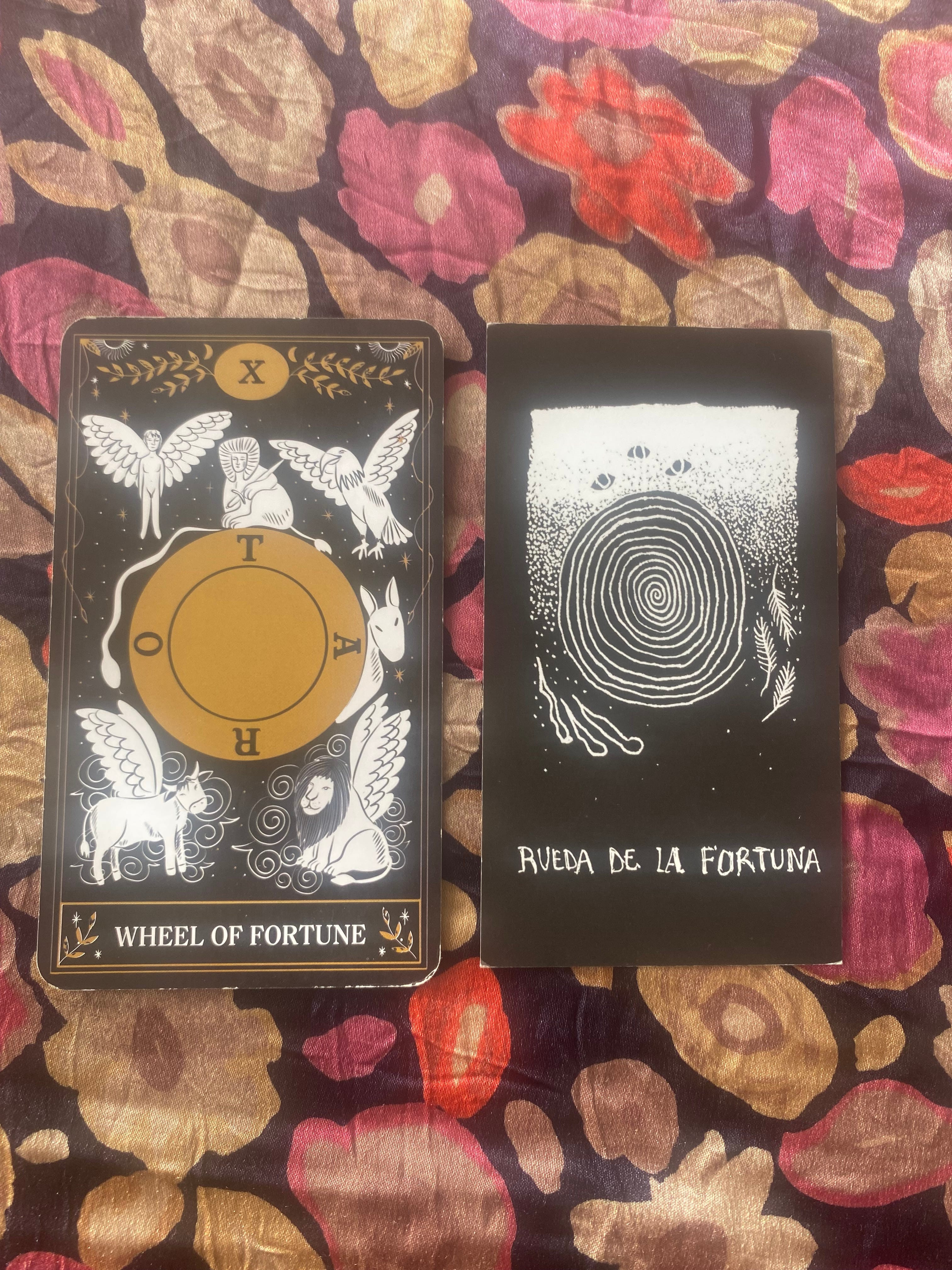
I return to the Wheel of Fortune – she rolls on, regardless. She picks up whatever sticks to her, like leaves stuck to a tire, and lo and behold they roll along with her. For the first time in my life, I feel I truly notice time. And – I like it. Time as its own thing: as a substance of my life, not just a material to measure my day, or a material through which I make work.
We give time a colour, a feeling – we give her meaning by coming into contact with her. And she will change us again and again and again, into states and ways we cannot control or understand.
I feel older and younger than I ever have. Previous sceptres of me, seven year old Lo, fifteen year old Lo, twenty four year old Lo, are more present, crystalline, than ever before. I see them and live them as people who existed, who I no longer am, but who I carry within me. Much like I carry the sceptres of my ancestors, my influences, my family. I guess, a better way of putting it – time and I have made better acquaintance.
The wheel of fortune rolls on, and she brings me with it. I am grateful that I have lived enough to sense her rolling.